
Power Flushing
Sludge and rust cleared out of your heating system, so radiators heat evenly again and the boiler stops working overtime.
From £395 — up to 8 radiators
Gas Safe registered · London & surrounding areas
Cold patches at the bottom of radiators, a boiler that bangs or kettles, radiators that need bleeding every other week, black water when you bleed them — that is magnetite. Rust and sludge circulating through the system and settling wherever the flow is slowest.
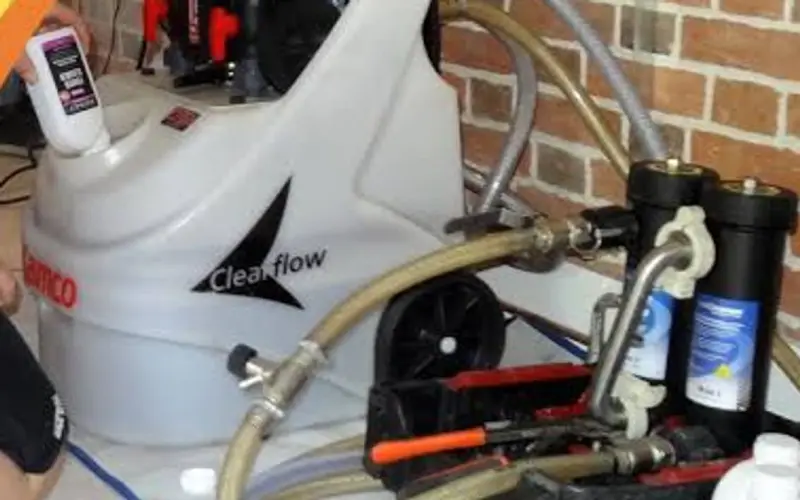
A power flush connects a high-flow, low-pressure pump to the system along with a cleaning chemical, and drives that debris out radiator by radiator, reversing the flow to lift what has settled. It is not the same as draining down and refilling, which moves the water and leaves the sludge exactly where it was.
We finish by adding an inhibitor and, if there is not one already, fitting a magnetic filter. Without that, the same sludge is back within a couple of years.
What’s included
- Full system flush with a dedicated pump and cleaning chemicals
- Every radiator flushed individually, flow reversed to lift settled sludge
- Water tested as we go until it runs clear
- Corrosion inhibitor added to protect the system
- Magnetic filter fitted where there is not one already
- Radiators re-balanced and the system checked over
Larger systems and heavily sludged ones are quoted after we have seen the property. The magnetic filter is included either way.
How long it takes
- Flat, up to six radiators
- Around half a day
- House, seven to twelve radiators
- Most of a day
- Large or badly sludged systems
- A full day or more
Typical durations for an average London property. We confirm yours at the survey, along with a fixed written price.
How we establish whether you need one, before quoting for one
There are three checks and none of them takes long. The first is the surface of each radiator by hand or with a thermal camera: cold at the bottom and warm at the top means magnetite has settled in that radiator, and settled magnetite does not respond to a chemical clean. The second is the system water itself — drawn off and tested, or simply looked at, because black water tells you the system is actively shedding iron oxide. The third is the magnetic filter if there is one: a filter that comes back loaded a month after being cleaned is a system with a great deal still to give up.
If all three come back clear and the complaint is uneven heating, the problem is balancing, not sludge, and a flush would be an expensive way to change nothing. We would rather say that. A flush sold to a system that did not need one is the fastest way to lose a customer who was going to need a boiler in two years.
What separates a power flush from a chemical flush
A chemical flush adds a cleaner, runs the system on its own pump for a period and then drains it. It cleans wherever the water already goes, which is precisely the problem: a radiator that is blocked is not receiving water, so it is not receiving cleaner either.
A power flush connects a separate high-volume, low-pressure pumping unit into the system, reverses the flow repeatedly and works radiator by radiator with the others isolated, so debris that a domestic pump cannot lift is agitated and carried out. A magnetic collector on the unit catches what comes loose. It finishes when the water running out is clear — a judgement made by looking, not by the clock. A domestic system is most of a working day; a power flush that took ninety minutes was a chemical flush with a better invoice.
Afterwards is the part that decides whether it was worth it
British Standard 7593, revised in 2019, sets out the practice: clean the system, flush it, add inhibitor at the correct concentration, fit an in-line filter, and check the inhibitor annually. Skipping the last two turns a flush into a temporary result — the same corrosion that produced the sludge is still happening, and in three years you are back where you started with a smaller bank balance.
One honest warning belongs at the quote and not afterwards: on a very old system, clearing corrosion occasionally exposes a pinhole the corrosion was plugging. It is uncommon, it is not caused by the flush, and it is far better raised before starting than discovered as a surprise.
What moves the price on a job like this
We give a fixed written price after the survey. These are the things that make one quote differ from another for what looks like the same work.
- How many radiators
- Each one is isolated and worked on in turn, so the count sets the length of the day.
- Microbore pipework
- Eight and ten millimetre pipe blocks far sooner than twenty-two, and takes longer to clear properly.
- How bad the system actually is
- A system shedding heavy magnetite needs more cycles and more water changes before it runs clear.
- Access to the radiators
- Built-in furniture, boxed-in valves and covers all add time before any work starts.
- Whether a filter is fitted afterwards
- Recommended by BS 7593 and the thing that protects what you have just paid to clean.
How it works
- 01
We check it is the right fix
Cold spots get diagnosed first. Air, a stuck valve or a failing pump is a cheaper job than a flush, and we will tell you if that is what it is.
- 02
Set-up
Floors protected and the flushing pump connected across the system.
- 03
The flush
Cleaner circulated, each radiator worked individually and the flow reversed until the water runs clear.
- 04
Protection
Inhibitor added, magnetic filter fitted if needed, radiators re-balanced and the system checked.
Questions we get asked
Do I actually need one?
Not always. If a single radiator is cold, it is often air or a stuck valve, and that is a much cheaper fix. We check before selling you a flush you do not need.
Is it the same as a chemical flush?
No. A chemical flush cleans through the system's own pump; a power flush uses a dedicated high-flow pump and physically drives the debris out. A heavily sludged system needs the second one.
Will it fix my cold radiators?
If they are cold at the bottom and hot at the top, that is sludge and a flush is the answer. Cold at the top is trapped air, and that is a bleed.
Is it needed before a new boiler?
Most manufacturers require the system to be cleaned before a new boiler goes on, and skipping it can invalidate the warranty. It is part of how we install.
Where this comes up in London
The systems that need it most are the 1960s and 1970s microbore circuits around Greenford, Northolt, Edmonton and Ponders End. Eight-millimetre pipe silts up decades before twenty-two does, and a new boiler dropped onto it takes everything the old one left behind straight into a heat exchanger with narrow waterways.
Other things we do
- New Boiler InstallationCombi, system and regular boilers supplied and installed by Gas Safe registered engineers — with manufacturer warranty registration.
- Full Central HeatingComplete heating systems fitted from scratch: boiler, pipework, radiators, controls and commissioning.
- Megaflo & Unvented SystemsHigh-pressure hot water for busy homes. Unvented cylinder installation, servicing and G3 certification.
- Under Floor HeatingWet underfloor heating zoned, balanced and pressure-tested before the screed goes down — on its own or alongside radiators.
- Boiler Service & BreakdownsAnnual servicing to keep your warranty valid, plus fast fault-finding and repairs when the heating goes down.
Get in touch
Fastest way to reach us is a call or WhatsApp — send a photo of the job and we will come back with a price. Prefer email? Use the form and we will reply as soon as we are off site.